


Overhead Crane
What Is an Overhead Crane?
An overhead crane, also known as a bridge crane or EOT crane, is one of the most common lifting and material handling systems used in industrial facilities. It is typically installed on an elevated runway system along the upper structure of a workshop. Through the horizontal and vertical movement of the hoist trolley and bridge, it enables efficient lifting, handling, and transfer of materials.
Depending on the lifting capacity, span, lifting height, duty class, and operating environment, Overhead bridge crane can be configured in various designs, including single-girder, double-girder, European-style, low-headroom, and explosion-proof types. They do not occupy valuable floor space, while offering stable operation and strong adaptability. Overhead cranes are widely used in machinery manufacturing, steel and metallurgy, automotive, energy, warehousing, and heavy equipment manufacturing, making them one of the most widely used lifting systems in industrial workshops.


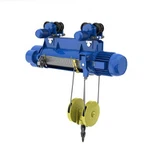
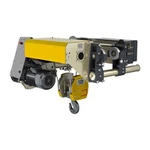
An Overhead traveling crane features a simple overall structure and a modular design, making it easy to assemble, disassemble, and maintain. The main components include the bridge, end trucks, electric hoist or trolley, travel mechanism, electrical control system, and safety protection devices. These components work together to ensure stable and reliable crane operation.
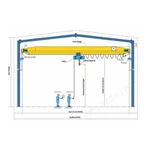
The bridge travels longitudinally along the runway rails installed on both sides of the workshop, while the hoist trolley travels laterally along the bridge girder. The hook performs the vertical lifting and lowering of loads, allowing the crane to cover a large working area within the facility.
Compared with ground-based lifting equipment, a Bridge crane makes use of the upper space of the workshop for material handling without occupying the main floor aisles. It is particularly suitable for repetitive lifting and handling operations within fixed production areas.

How Does an Overhead Crane Work?
First, the electric hoist or crane trolley lifts the load through the hoisting mechanism. The trolley then travels along the main girder to move the load to the target position. Finally, the bridge crane travels along the runway rails of the workshop, delivering the load to the designated working area.
The crane's travel speed can be configured with either fixed-speed or variable-frequency drive (VFD) control according to operating conditions. For production lines requiring frequent starts and stops and precise positioning, VFD control with soft start and soft stop can be used to reduce load sway and mechanical impact.
This configuration is particularly suitable for assembly, loading and unloading, equipment maintenance, die and mold handling, and material transfer along production lines within workshops.
Types of Overhead bridge crane
Our overhead crane range covers capacities from 1 to 200 tons, with configurations available for different spans and operating conditions. Standard specifications are listed below, while non-standard parameters can be customized.
| Equipment Type | Rated Lifting Capacity | Applicable Span | Lifting Height | Common Duty Class | Travel Characteristics | Applicable Operating Conditions |
| Single Girder Overhead Crane | 1~10t | 7.5~16m | 6~30m | A1~A3 | Lightweight and smooth operation, with low self-weight and minimal impact on the workshop's headroom. | Light-duty, intermittent operations, suitable for general machining, die and mold workshops, and raw material warehouses. |
| Double Girder Overhead Crane | 10~200t | 10.5~35m | 6~40m | A4~A7 | High structural rigidity and large load capacity, suitable for high-frequency, continuous-duty operations. | Medium- to heavy-duty assembly, heavy equipment manufacturing, large-component handling, and 24-hour continuous production workshops. |
| Explosion-Proof Overhead Crane | 1-50t | 7.5-30m | 6-30m | A2-A4 | The entire crane is equipped with explosion-proof components. Motors, electrical components, and switches feature explosion-proof protection, with spark-free and anti-static design. Speed-limited operation provides a high level of safety. Available in explosion-proof single-girder and double-girder configurations. | Chemical plants, oil and gas facilities, dusty workshops, flammable and explosive material warehouses, and other high-risk environments for hazardous material production and handling. |
| Metallurgical Overhead Crane | 5-100t | 10-32m | 8-36m | A6-A8 | High-temperature resistance, thermal radiation resistance, and fatigue-resistant structural design. The main girder and braking system are reinforced, with dust- and slag-resistant protection, supporting 24-hour continuous operation under high-temperature, heavy-load conditions. | High-temperature workshops for steelmaking, ironmaking, casting, hot rolling, and heat treatment, as well as heavy-duty applications involving molten material handling and metallurgical production lines. |
Note: The above are standard specifications. The span, lifting height, travel speed, and safety protection configuration can be customized according to the customer's workshop dimensions, operating frequency, and specific working conditions.
How to Choose the Right Overhead bridge crane?
Many customers focus only on the rated lifting capacity when selecting a crane, which can easily result in equipment that does not match the actual site conditions or suffers from premature wear. Crane selection should be based on both the operating conditions and workshop parameters. We recommend confirming the following key factors first:
Determine the Maximum Load
Determine the rated lifting capacity based on the maximum actual load to be handled, including additional loads from lifting devices, clamps, and other attachments. Allow sufficient safety margin when selecting the crane; selecting a crane for continuous operation at full rated capacity is not recommended.
Determine the Crane Span
The span generally refers to the distance between the centerlines of the crane runway rails on both sides of the workshop. An excessive span increases the self-weight of the main girder and overall equipment cost, while an insufficient span limits the effective lifting range and reduces the utilization of workshop space.
Determine the Lifting Height
Lifting height is the vertical distance between the lowest and highest limit positions of the hook. Selection should not be based solely on the total workshop height. The effective lifting height must also be calculated to ensure sufficient clearance for actual load handling.
Determine the Duty Class
The duty class is determined by the load spectrum, daily operating hours, and lifting frequency. Longer daily operating hours and more lifting cycles require a higher duty class. Low-duty, light-load cranes must not be used for high-frequency, heavy-load applications, as this can accelerate fatigue and equipment failure.
Check the Available Headroom
Check the elevation of the crane runway rails and the height of the underside of the roof structure. Sufficient safety clearance above the crane should be reserved, while the effective hook lifting space should also be calculated to prevent insufficient hook height after installation.
Determine the Operating Environment
If the workshop involves high temperatures, heavy dust, corrosive media, or flammable and explosive gases or dust, the crane must be equipped with the appropriate specialized configuration and electrical protection, such as explosion-proof, metallurgical, or corrosion-resistant designs.
Select the appropriate hoisting and control configuration according to positioning accuracy requirements and site operating practices. Options include electric hoist lifting, dual-speed hoisting, and variable-frequency drive (VFD) control. Operating methods can include pendant control, wireless remote control, or operator's cab control.
Safety Protection Configuration
Overload Protection
An overload limiter is installed. When the load reaches 90% of the rated capacity, an audible and visual warning is activated. When the load exceeds 105% of the rated capacity, the power supply to the hoisting circuit is cut off and lifting is disabled, reducing the risk of main girder deformation, wire rope breakage, and load drop.
Upper and Lower Limit Protection
The hoisting mechanism is equipped with upper and lower limit switches, while travel limit switches are installed at both ends of the bridge and trolley travel paths. The crane automatically stops when the hook reaches the upper lifting limit or the bridge/trolley reaches the end of the runway, preventing over-hoisting and collisions with the end trucks.
Buffer and Anti-Collision Protection
High-strength buffers are installed at both ends of the crane, together with runway end stops, to absorb travel inertia, prevent hard collisions, and protect both the crane and runway system.
Emergency Power-Off Protection
Red self-locking emergency stop buttons are installed on both the pendant control and crane body. In an emergency, the control circuit can be disconnected immediately with one press, stopping all crane movements.
Grounding and Leakage Protection
The crane's metal structure is reliably grounded, and the electrical control system is equipped with leakage protection devices to eliminate the risk of electric shock and ensure operator safety.
Audible and Visual Warning
Audible and visual alarms are activated when the crane starts or when the bridge and trolley are traveling, alerting personnel nearby to keep a safe distance. This is particularly suitable for busy production workshops.
Anti-Detachment and Anti-Drop Protection
The hook is equipped with a safety latch, while the drum and sheaves are fitted with wire rope anti-detachment devices to prevent hook disengagement and wire rope derailment, reducing the risk of load drop.
Braking and Wind Parking Protection
The hoisting, bridge travel, and trolley travel mechanisms are all equipped with brakes for reliable stopping and holding. Outdoor cranes can additionally be equipped with rail clamps or anchoring devices to prevent unintended crane movement caused by wind.
Which Industries and Workshops Use Overhead Cranes?
Overhead cranes are widely used for material handling, equipment installation, and finished product transfer within factories. Different crane types can be selected according to workshop conditions, lifting capacity, and operating frequency.

Machinery Processing and Equipment Manufacturing Workshops
Used for handling steel, components, dies and molds, and machine tools, as well as equipment installation and finished product transfer. Single-girder overhead cranes are commonly used for light loads and low-frequency operations, while double-girder cranes are suitable for heavier loads and high-frequency operations.

Steel, Metallurgy, and Metal Processing Workshops
Mainly used for handling steel, billets, aluminum, and metal products in foundries, steel mills, and metal processing workshops. Cranes can be configured according to specific operating conditions such as high temperatures and heavy dust.

Warehousing and Logistics Facilities
Used for loading, unloading, stacking, and transferring raw materials, finished products, and other goods. Light-duty single-girder overhead cranes are generally suitable for standard warehouse operations, while heavy-duty warehouses require crane selection based on load weight and operating frequency.

Chemical and Explosion-Proof Workshops
Used for handling chemical raw materials, equipment, and production components. In environments containing flammable or explosive gases or dust, explosion-proof overhead cranes should be used, with the explosion-proof electrical system configured according to the hazardous area classification.

Hydropower, Heavy Industry, and Equipment Maintenance Workshops
Suitable for the installation, maintenance, and dismantling of heavy equipment such as generating units, transformers, and large machinery. Double girder eot cranes are typically used for heavy-load and long-span applications.

Building Materials, Die and Mold, and Hardware Workshops
Mainly used for daily handling of plates, profiles, dies and molds, tooling, and semi-finished products. For medium- and small-capacity lifting operations with standard working frequency, Single girder eot crane are generally more suitable.
How to Choose an Overhead Crane for Different Operating Conditions?
Overhead crane selection should be based on a comprehensive assessment of lifting capacity, building height, building span, operating frequency, working environment, lifting precision, and other factors. A single parameter cannot determine the appropriate crane type.
| Operating Conditions | Recommended Solutions | Selection Notes |
| Material handling in general workshops, light loads, moderate operating frequency | Single Girder Overhead Crane | Low cost and easy to install, commonly used for standard components up to 5 tons and finished product handling |
| Lifting and handling of medium- to heavy-duty loads | Double Girder Overhead Crane | Better structural rigidity, suitable for loads above 5 tons with higher load-bearing capacity |
| Insufficient building height and limited headroom | Low-Headroom Overhead Crane | Reduces the upper hook limit height and makes full use of limited headroom |
| Continuous lifting and handling with high operating frequency | High-Duty-Class Crane (A5 and Above) | Metal structures and electrical components are designed for frequent starts and stops, ensuring durability and reliable operation |
| Large building span | Double Girder Overhead Crane / Customized Optimized Main Girder | Double girder cranes are preferred for large spans; optimize the main girder structure when necessary to control deflection |
| Flammable, explosive, or high-dust hazardous workshops | Explosion-Proof Overhead Crane | Electrical, braking, and other components are designed for explosion-proof operation to meet hazardous-area requirements |
| Installation and maintenance of large, heavy equipment | Heavy-Duty Double Girder Overhead Crane | Heavy-duty, high-rigidity structure, suitable for lifting heavy machinery and large components |
In summary, crane selection should consider the rated lifting capacity, available building height, runway span, daily operating hours, working environment, and positioning accuracy. Only after a comprehensive assessment of these factors can the appropriate Eot crane model and configuration be determined.
Why Choose Our Bridge cranes?
The Eot cranes market is highly competitive, and many manufacturers face issues with inconsistent quality and reliability. Dafeng Crane has specialized in overhead crane manufacturing for many years, focusing on robust construction, stable performance, low failure rates, strong adaptability, and reliable after-sales support. Our cranes are designed to meet the long-term production needs of factories, with clear core advantages:
Durable Construction with Excellent Deformation Resistance
The main girder is made from standard-grade steel with reinforced plate welding, followed by stress-relief, rust-proof, and anti-corrosion treatment throughout the manufacturing process. This prevents main girder bending, vibration, and deformation during long-term heavy-duty operation, extending the service life by more than 30% compared with conventional models.
Stable and Reliable Operation
High-quality branded motors, gearboxes, and wire ropes are used to avoid common issues associated with low-quality components, such as motor burnout, premature wear, abnormal noise, and jamming. Variable-frequency speed control ensures smooth starting and stopping without impact and provides precise positioning, meeting operating requirements across A1-A7 duty classes.
Customized to Your Requirements
Whether for light-duty workshops with small spans and lifting capacities, heavy-duty workshops with large spans and capacities, or specialized high-temperature and explosion-proof environments, our cranes can be customized to suit specific requirements. Span, lifting height, operating method, and protection rating can all be adjusted to match different working conditions.
Energy Efficient and Low Consumption
Optimized transmission systems and motor configurations reduce energy consumption. Compared with traditional overhead cranes, our cranes significantly reduce daily power consumption, helping lower long-term operating costs.
Low Failure Rate
Standardized manufacturing and strict quality inspections are implemented throughout production. Each crane undergoes no-load and full-load testing and commissioning before delivery to minimize potential faults. The simple structure and reduced number of wearing parts make daily maintenance easier and significantly reduce downtime caused by equipment failures.
Complete Certifications and Documentation
The complete crane complies with national standards for lifting equipment manufacturing and is supplied with complete qualifications and documentation. We can assist customers with equipment inspection, acceptance, and registration, helping ensure compliant operation and smooth integration into production.
What Factors Affect the Price of an Overhead Crane?
Overhead cranes do not have a fixed standard price. The cost is determined by multiple parameters and configuration requirements.
Main factors affecting the price:
Rated lifting capacity
Crane span
Lifting height
Duty class
Structural type (single girder / double girder)
Hoisting equipment (electric hoist / hoist trolley)
Bridge and trolley travel speeds
Control method (pendant control / variable frequency control, etc.)
Safety and protection features
Runway length
Special operating conditions (explosion-proof, high-temperature, corrosion-resistant, etc.)
